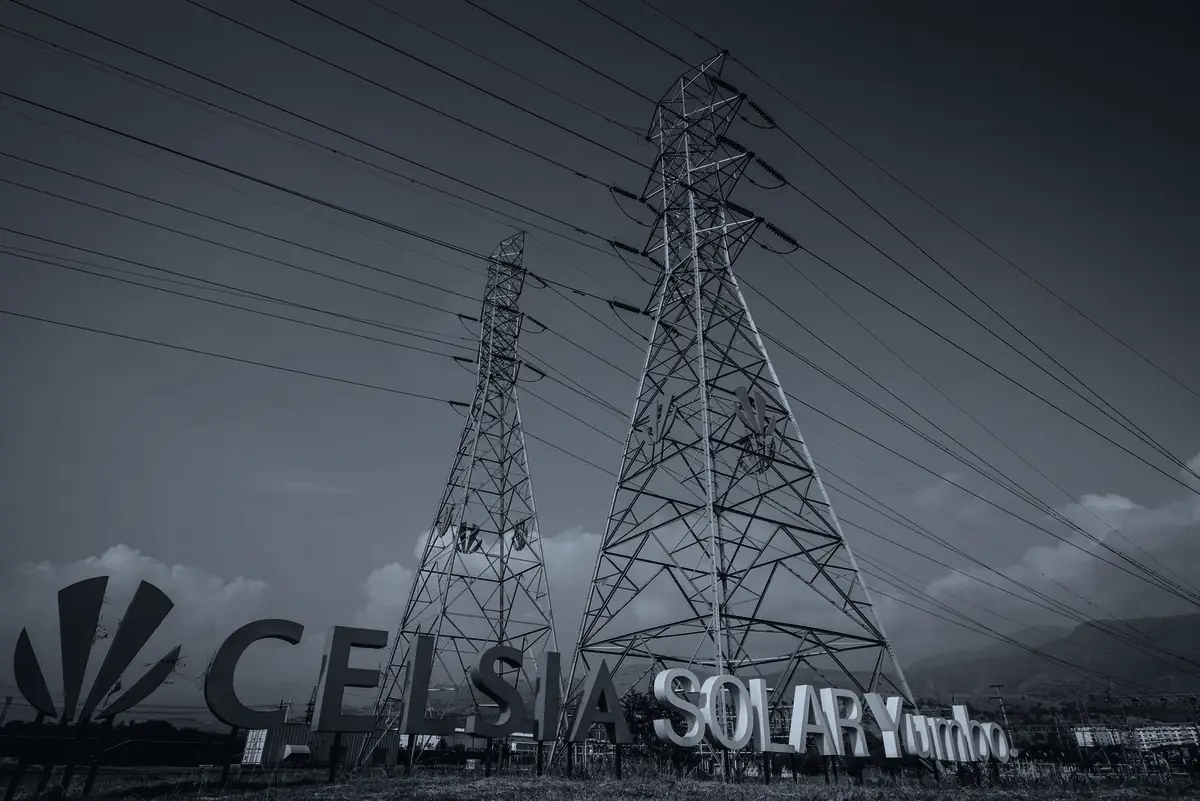
PV Plant Inverter Transients — Power-Frequency Surge Analysis
EMT simulation and Simulink converter-control modelling to trace power-frequency surges to their source in a regional PV fleet
- transient simulation
- EMTP
- inverter control models
- Simulink
- PV fleet
- Regional
Project context
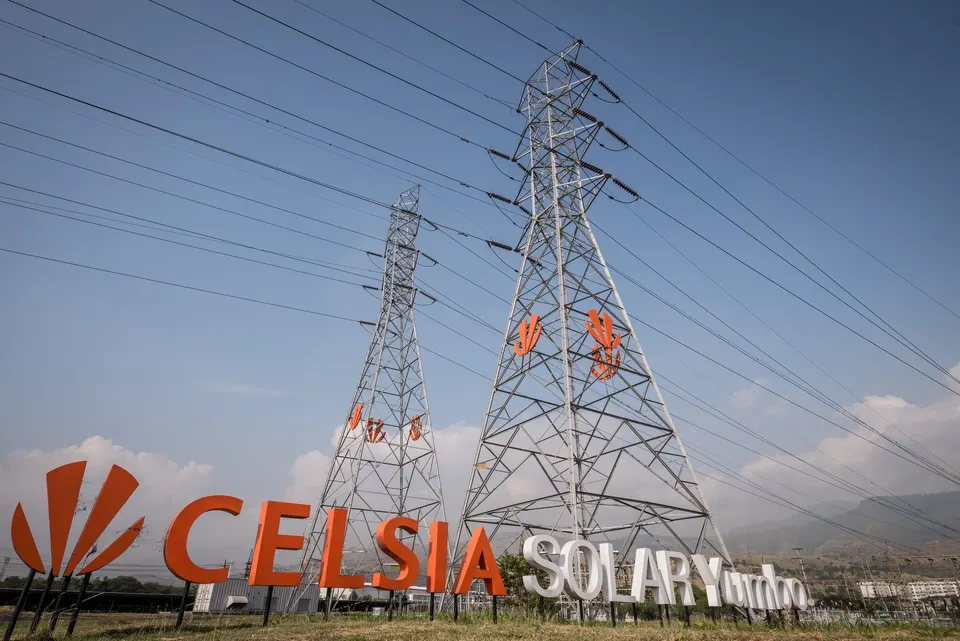
Power-frequency overvoltage surges were being observed on the regional network, with Celsia's photovoltaic plants the suspected source. Rather than treat the inverters as black boxes, Gridradix modelled the control systems of the plants' DC/AC converters in MATLAB/Simulink and ran electromagnetic-transient simulations in EMTP to reproduce the surges, identify the operating conditions and control interactions that produced them, and define corrective settings — a class of overvoltage that conventional load-flow and short-circuit tools cannot see.
Scope of work
Root-cause analysis of power-frequency surges attributed to photovoltaic power plants, using electromagnetic-transient simulation in EMTP.
Modelling of the control systems of the plants' DC/AC converters in MATLAB/Simulink for transient analysis, including current control, phase-locked loop and anti-islanding behaviour.
Reproduction of the observed surge events in simulation, with sensitivity studies across grid strength, irradiance and fault scenarios.
Identification of the control and network interactions responsible for the overvoltages, and definition of mitigation measures — inverter settings and protection coordination.
Support for the operator's power-quality compliance reporting and client-compensation review (SAIDI, SAIFI, DIU and FIU indicators).
Engineering contribution
By modelling inverter control explicitly instead of assuming ideal sources, the study explained overvoltages that steady-state tools cannot reproduce — and gave the operator concrete settings and a repeatable model for evaluating new PV connections.
Studies performed
- Insulation coordination All cases — Insulation coordination
- Interconnection studies All cases — Interconnection studies
Systems & technologies
- EMTP
- MATLAB/Simulink
- DC/AC converter control
- Temporary overvoltage
- PV plant
- Power quality
- Root-cause analysis
Gallery
-
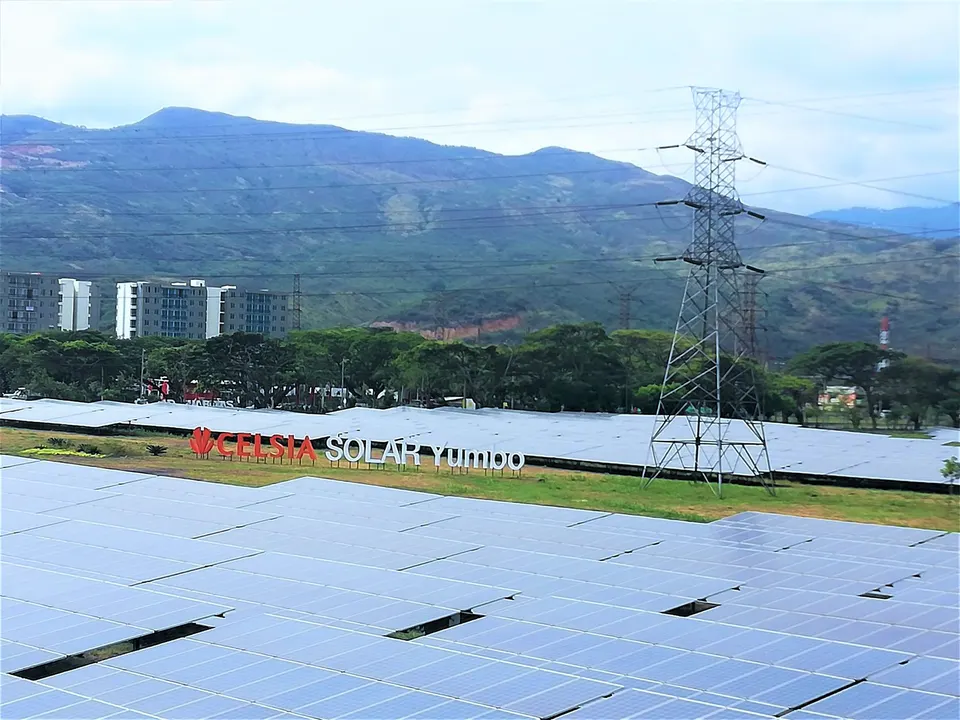
The 9.9 MW Celsia Solar Yumbo plant with the regional transmission line behind it. Rojasyesid · Wikimedia Commons · CC BY-SA 4.0 -
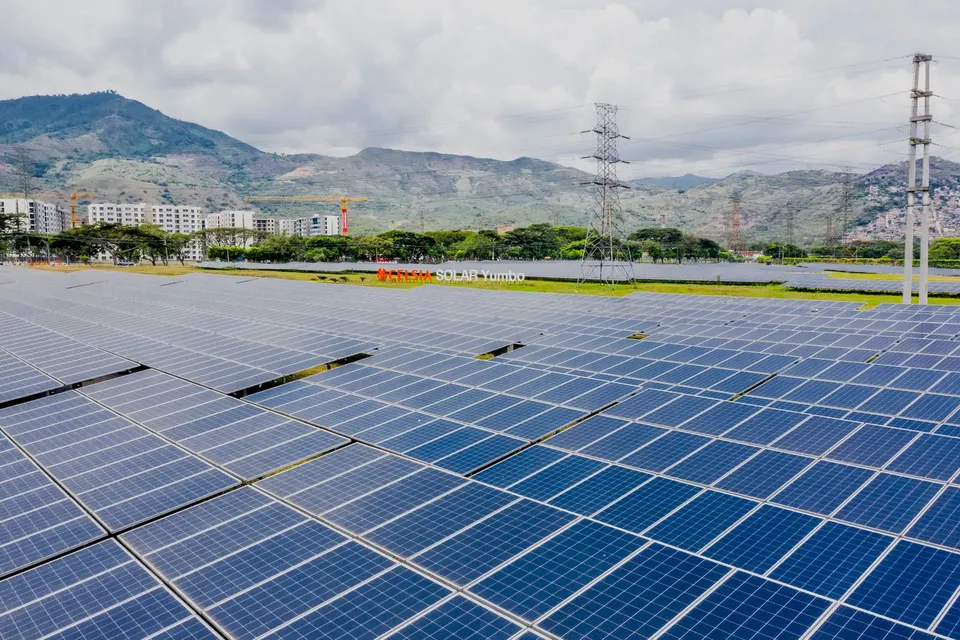
Celsia Solar Yumbo — the first utility-scale solar farm built by Celsia in Valle del Cauca. Carlos Enrique Pimentel · Wikimedia Commons · CC BY-SA 4.0
More cases
Solar PV-
Utility-Scale PV Engineering
Utility-Scale PV2024
Alberta, Canada
- insulation coordination
- HV
- grounding system
- FEM
Asset type: Solar PV

Illustration
-
Industrial PV Plant Recovery
1.5 MW2021
Cali, Colombia
- solar array
- 1.5 MW
- root-cause analysis
- RCA
Asset type: Solar PV
Illustration
-
Regional Grid Integration
Regional Grid2025
Valle del Cauca, Colombia
- small-signal & transient
- Stability
- regional network
- Load Flow
Asset type: Grid & transmission

Illustration